
First Day in Seoul: A Jet-Lag-Friendly Plan for Early Arrivals and Hotel Check-In Gaps
A practical, map-aware guide to first day in seoul: a jet-lag-friendly plan for early arrivals and hotel check-in gaps.
Quick answer
Arrive, clear immigration, stash or track your luggage, then pick one calm neighborhood (Insadong/Jongno) for a short, low-commitment wander, a light meal, and a timed rest. Use a simple planner spreadsheet to record arrival logistics, hotel check-in policy, and a fallback storage/nap plan so you can decide quickly at the airport. If you prefer to avoid uncertainty, pre-book one paid storage or a day-room option and confirm with the hotel before you leave home.
Before you book or pack
Decide your tolerance for risk: do you want to gamble on early check-in or guarantee a place to drop bags and rest? Evergreen choices: confirm your hotel’s official check-in time and luggage-hold policy in writing (email or message), note public-transport options from your arrival airport, and plan one low-effort neighborhood close to your hotel for the first few hours. Time-sensitive items to verify on travel day include train/bus timetables, lounge availability, and any temporary travel advisories—check official sources before you travel [1] [2].
Arrival logistics: luggage and transport options
At Incheon or Gimpo you’ll have the same basic decisions: move straight to your hotel, store luggage at the airport or station, or use a paid luggage service in the city. Public-transport and airport-limousine options both connect central Seoul; decide by how much walking you want to do and how much you want to spend. For general guidance on getting from airports into Seoul, see the city and national airport pages before you travel [1] [2].
Compact choices table (quick read)
| Priority | Best if you want... | Notes |
|---|---|---|
| Minimal walking, lower cost | AREX/train or airport bus to central station | Efficient with luggage-friendly cars; check platform access and elevator availability [1][2] |
| Least uncertainty on the ground | Taxi or private transfer | Door-to-door but variable cost and traffic |
| Immediate baggage solution | Airport or Seoul-station storage / paid service | Shortcut to neighborhood exploration without hotel check-in delays; verify current locations and fees |
| Guaranteed rest | Pre-book a day room or hotel early check-in (confirm directly) | Best if you must sleep immediately — confirm availability with property |
(Do not assume operating hours or fees are fixed—verify before travel.)
One low-commitment neighborhood: Insadong / Jongno path
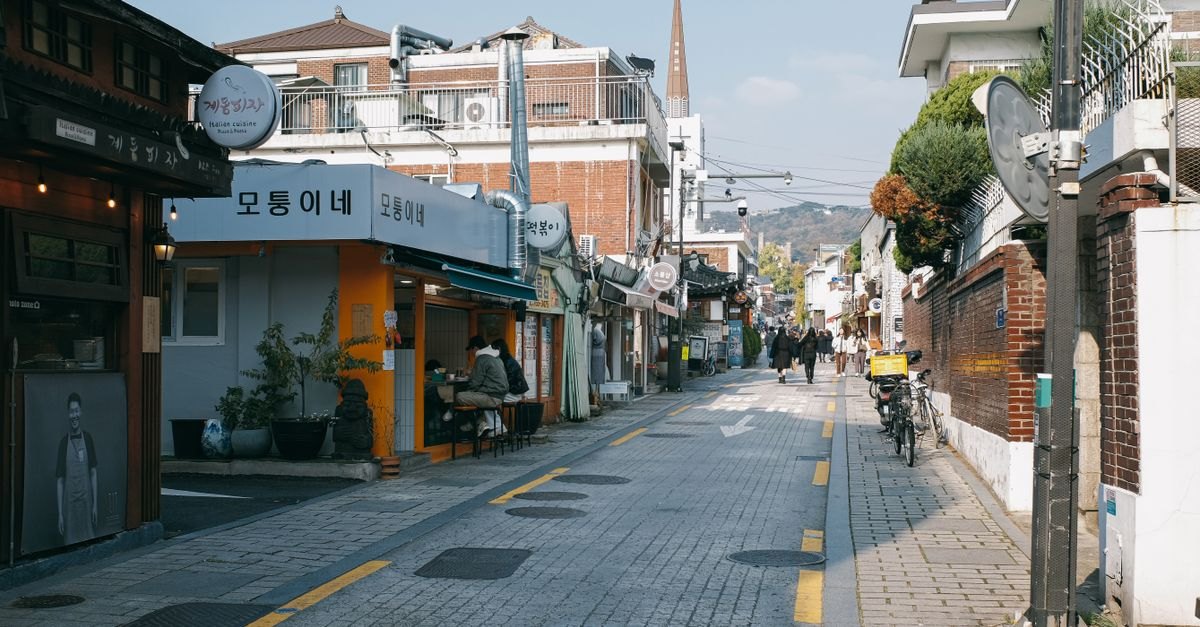
Pick a nearby, walkable zone so you can stop early if you’re jet-lagged. Insadong/Jongno is a compact choice: short streets with tea houses, light restaurants, galleries, and benches to sit. Plan a single loop rather than a long linear route: coffee/tea → short temple or museum frontage → casual lunch → bench/rest/people-watch. This keeps walking light and gives flexible exit points to return to the hotel for a nap or change.
Evergreen tip: choose a neighborhood whose transit stops are well-served by lines you’ll likely use later; that makes returning easier. Time-sensitive: double-check attraction opening hours if you plan to enter anything specific.
Spreadsheet workflow (fields, buffers, and decision points)
Create a one-page arrival tab in your trip spreadsheet (example format: seoul itinerary spreadsheet). Include these columns/fields: - Flight (airline, number), scheduled arrival (local time) - Immigration & baggage estimate (your personal buffer notes) - Transport options (rank: train, bus, taxi) and local station/stop names - Hotel name, address, check-in time, luggage-hold policy (copy the confirmation text) - Storage option (airport/paid city service) + contact and hours - Neighborhood plan (Insadong loop) with approximate duration (e.g., 1–3 hours) - Rest window (start, end) and fallback (return to hotel / buy day room) - Meals (light) and first cafe choice with directions - Plan B contact numbers (hotel front desk, luggage service)
Buffers to set (decision framework, not fixed rules): allow extra time for immigration and baggage if your arrival is international; factor in transit walking for luggage; schedule a rest window after your planned activity rather than before it so you can extend or shorten as needed. Always flag any item that requires a prior booking and place a reminder to reconfirm 24–48 hours before arrival.
Contingency choices to pre-fill: - If you can’t check in: use your pre-saved paid storage or head straight to a café with reliable seating near the hotel and portable chargers. - If you’re exhausted on arrival: request early check-in or a day room (confirmation in spreadsheet), or return to the airport lounge if you have lounge access. Confirm any paid options before relying on them.
Day-of routing and light-walking pace
On arrival, follow this order: immigration → baggage → quick decision (hotel attempt or storage) → transport into city → neighborhood loop → light meal → scheduled rest. Keep walking distances short (one to three localized blocks at a time) and plan frequent sitting breaks. Choose eateries with flexible service (cafés or small casual restaurants) rather than reservation-only options.
Evergreen strategy vs time-sensitive facts: the strategy—stashing bags, minimizing walking, and planning a single neighborhood loop—is evergreen. Exact services, train times, storage availability, and hotel policies are time-sensitive; check the official pages or your hotel messages on travel day [1] [2].
SeoulSheets connection
Use the arrival tab inside your SeoulSheets planner to centralize decisions and avoid “what now?” moments at the airport. Key fields to add to your sheet: arrival contact, hotel check-in policy (copy/paste), storage booking link and confirmation number, neighborhood map link, and an “if tired” checkbox that triggers a secondary action (e.g., “book day room” or “use paid storage”). Save a short printable or offline screenshot of the single-row arrival plan so you can access it without network service.
Also link the hotel check-in gap luggage solutions guide into your sheet for quick reference when you need to decide between waiting and storing bags hotel check-in gap luggage solutions.
Final take
Start conservatively: protect your energy and your luggage plan. With a one-page arrival workflow in your planner, a pre-decided neighborhood loop in Insadong/Jongno, and at least one confirmed luggage or rest option, your first day in Seoul becomes a controlled, low-stress introduction rather than a series of last-minute choices. Verify transfer and storage options on arrival day and use the spreadsheet to move from indecision to action quickly.
Official checks: