
Jongno Neighborhood Guide: Palaces, Markets, and Walkable Sightseeing
A practical, map-aware guide to jongno neighborhood guide: palaces, markets, and walkable sightseeing.
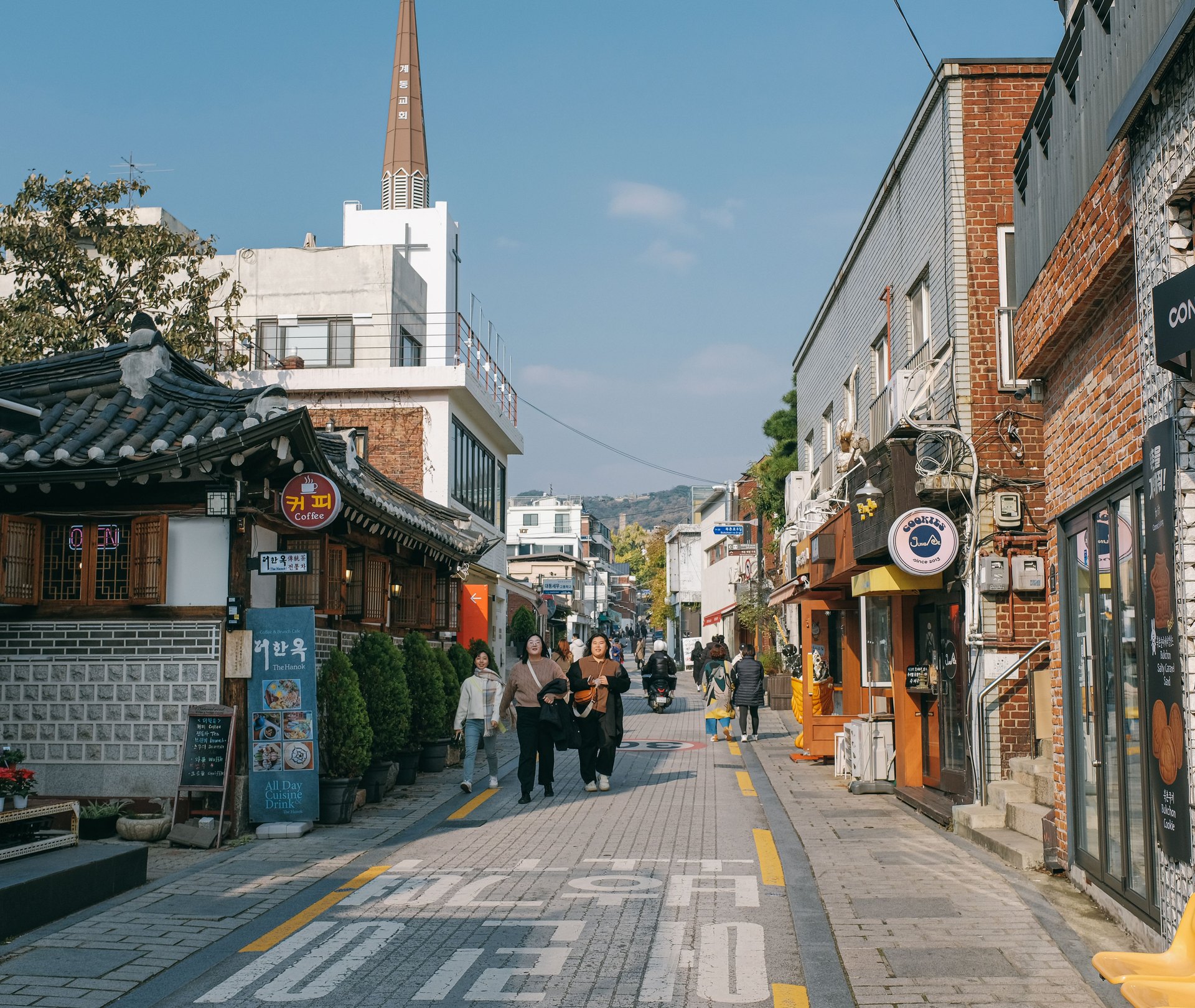
Quick answer
Jongno is the most efficient neighborhood for a heritage-first Seoul visit: three major palaces, hanok streets, markets and museums sit close enough to chain together on foot if you prioritize a compact day. Walk when you want continuous, slow sightseeing (Gwanghwamun → Gyeongbokgung → Bukchon → Insadong); take a short subway or bus transfer when you need to reach a different district or save time between split-day plans. Check palace entry and event rules before you go — palaces and some hanok sites have seasonal access or special-closure days that change frequently. Seoul palace guide and hanbok rental explains dressing/entry details to confirm before you plan.
Why Jongno works for first-time visitors
Jongno concentrates Seoul’s signature heritage sites and pedestrian-friendly streets, so you cover more on foot than in spread-out neighborhoods. Gyeongbokgung sits at the core of the palace cluster and is the most visited starting point for palace circuits [1]. Bukchon’s traditional hanok lanes lie between the palace area and modern shopping streets, giving immediate contrast and short walking links to Insadong and Jongmyo Shrine [2] [3]. Because the attractions are dense, you trade transit time for walking time and more on-the-ground discovery.
Where walking is realistic — and a compact table to choose
Short walks are ideal when you want uninterrupted sightseeing and photo time. Choose walking if you: prefer flexible stops, are comfortable with stairs and uneven pavements in hanok alleys, and don’t need to visit far-flung neighborhoods the same day.
| Route pair | Walkable? | Why choose walking | When to transfer instead |
|---|---|---|---|
| Gwanghwamun ↔ Gyeongbokgung | Yes | Immediate gateway to palace grounds and museums | N/A — transfer unnecessary |
| Gyeongbokgung ↔ Bukchon | Yes | Direct lanes, photo stops, hanok access [1][2] | If mobility limits or tight schedule |
| Bukchon ↔ Insadong | Yes | Short cultural stroll with galleries and tea houses [2] | If carrying luggage or visiting farther sites |
| Jongno → Dongdaemun or Myeongdong | No | Longer, busier streets make transit faster | Take subway/bus to save 15–30+ minutes |
| Jongno → N Seoul Tower (Namsan) | No | Uphill and park paths slow you down | Cable car/walk uphill only if you plan a hike |
These choices are strategic, not absolute. Verify site access and recommended walking routes on official pages before you go.
Sample compact walking route (half- to full-day)
- Start at Gwanghwamun Plaza for orientation and exterior photos; move into Gyeongbokgung if you plan internal visits. Confirm entry requirements and any guided-tour times on the palace site first [1].
- Exit toward Bukchon Hanok Village and follow one of the main alleys for traditional houses and viewpoints. Keep an eye out for private residences and respect signage [2].
- Drop south into Insadong for lunch, galleries, and tea houses. Allow flexible time for browsing.
- If you have energy, add a short walk to Jogyesa or Jongmyo Shrine; otherwise, hop a nearby subway for destinations beyond Jongno.
This route keeps transit to a minimum and leaves options for a mid-afternoon subway jump if you want Dongdaemun shopping or Hongdae nightlife later. Check the linked official pages for any restricted access, special events, or reservation requirements before finalizing.
Planning spreadsheet workflow — fields, buffers, choices, contingency
Use a simple spreadsheet to turn the above into a practical plan. Include these columns: - Date / Day - Start location (station / address) - Site name - Visit intent (exterior, interior, guided tour) - Estimated on-site duration (min) - Walking time to next site (min) - Transit needed? (Y/N) — if Y, add transit time estimate and line/station - Reservation required? (Y/N) — link to official page - Entry cost check (link) - Notes (accessibility, food options, peak crowd notes)
Buffer rules (strategy, not fixed): add 10–20 minutes between short walking links for rest/photos; add 30–60 minutes buffer when you list a palace interior or a timed guided tour to allow security lines or ticketing. For transfers, add a conservative 15–30 minute buffer for platform changes or exits during peak hours.
Choices to make: prioritize either fewer sites with longer on-site time (museum-depth) or more sites with quick stops (photo-focused). Mark each site as “must” or “optional” and build two alternate midday routes in the sheet: one walk-first, one transit-first.
Contingency plan: if a palace or museum is unexpectedly closed or heavily timed, switch to a nearby indoor alternative (a museum or tea house in Insadong) and use your transit buffer to jump to another neighborhood. Flag one extra “backup” site per morning in the spreadsheet so you don’t lose momentum.
SeoulSheets connection
If you want a ready-made place to store the route fields above, add these columns to your copy of the seoul food map spreadsheet: “Visit intent,” “Buffer minutes,” “Reservation link,” and “Alternate plan.” Use the sheet to map lunchtime options by distance from the next site and sort by walking time to keep decisions visual. Color-code rows red/yellow/green for “must/optional/backup” and filter by transit-needed to see which days require a card or extra travel time.
Evergreen strategy vs time-sensitive facts
Evergreen strategy: cluster heritage sites into walking blocks, plan buffers for entry and crowds, and maintain a single-sheet alternate-plan column so you can swap quickly. These approaches work regardless of seasons or event calendars.
Time-sensitive facts: opening hours, special exhibitions, guided-tour schedules, hanbok rental availability, or temporary closures change often. Always confirm the latest operational details on an attraction’s official page before you commit to timed entries or external reservations [1][2][3].
Final take
Jongno is a travel-efficient halo for a heritage-first Seoul trip: walk when you want immersive, continuous exploration; transfer when you need speed or to reach other districts. Build a compact spreadsheet with intent, buffers, and a clear contingency column, and verify entry and event details on official sources the day before. Use the seoul food map spreadsheet to keep food and timing aligned with your walking plan, and see the linked palace-and-hanbok guide for clothing and entry nuances Seoul palace guide and hanbok rental.
Official checks: