
Seochon Neighborhood Guide: Hanok Alleys, Art Stops, and a Better Half-Day Route
Use Seochon's low-rise lanes, galleries, cafes, and palace-edge location to build a slower half-day that feels coherent instead of crowded.
Quick answer
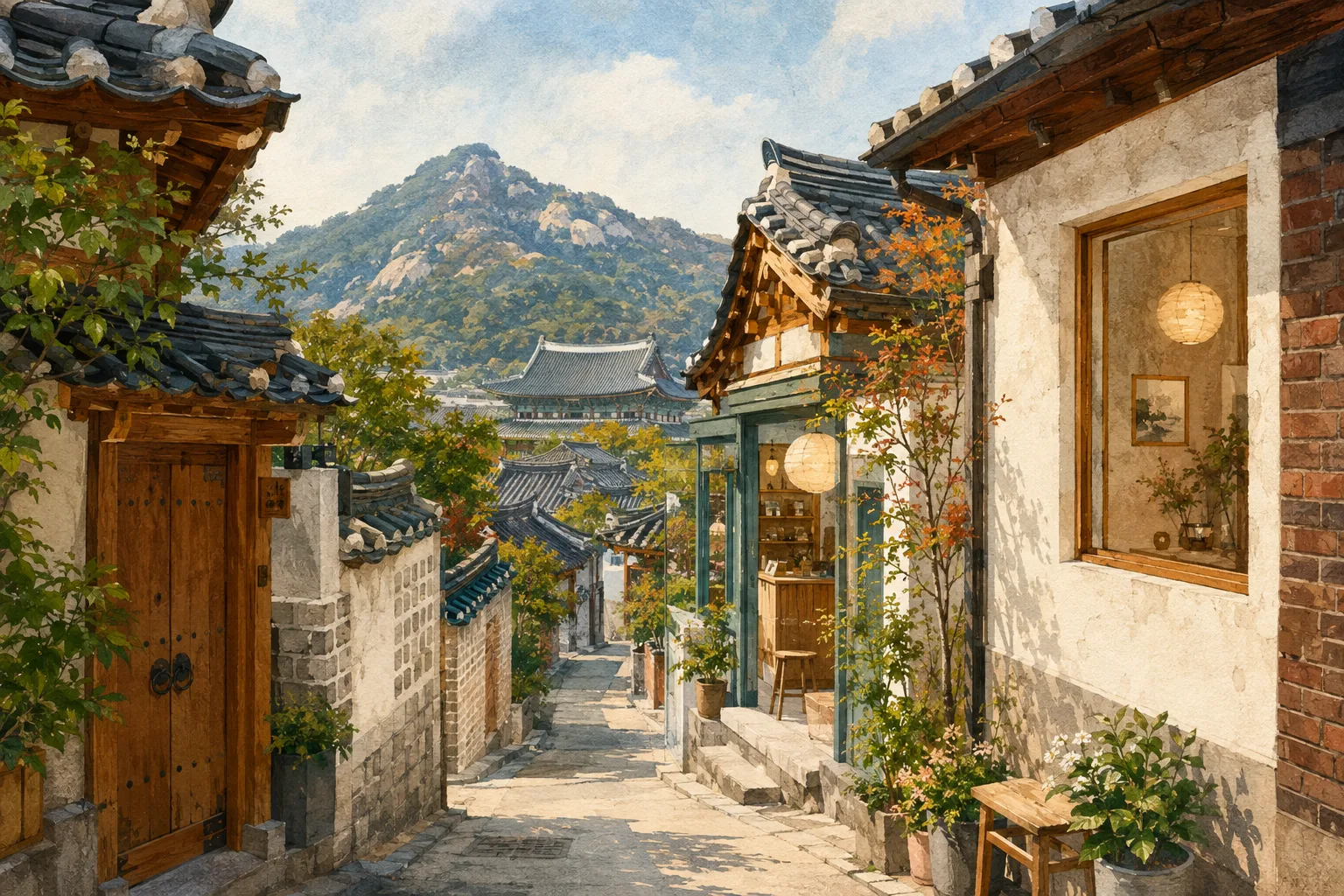
Seochon is the low-rise neighborhood west of Gyeongbokgung Palace, where old hanok roofs, working homes, small galleries, cafes, and palace history sit close together. The best first visit is a half-day from Gyeongbokgung Station: start with one major cultural stop, walk the Tongin-dong and Ogin-dong lanes, pause at one cafe or gallery, and finish with a meal or a quiet view toward Inwangsan. It is a better fit for travelers who enjoy wandering and small discoveries than for anyone trying to collect every landmark in one afternoon.
Why Seochon deserves its own half-day
The official Seochon overview places the neighborhood between Gyeongbokgung Palace and Inwangsan Mountain. That geography explains its character: the palace gives the day a clear anchor, but the neighborhood itself is made of ordinary lanes, low-rise houses, studios, and shops rather than one monumental entrance.
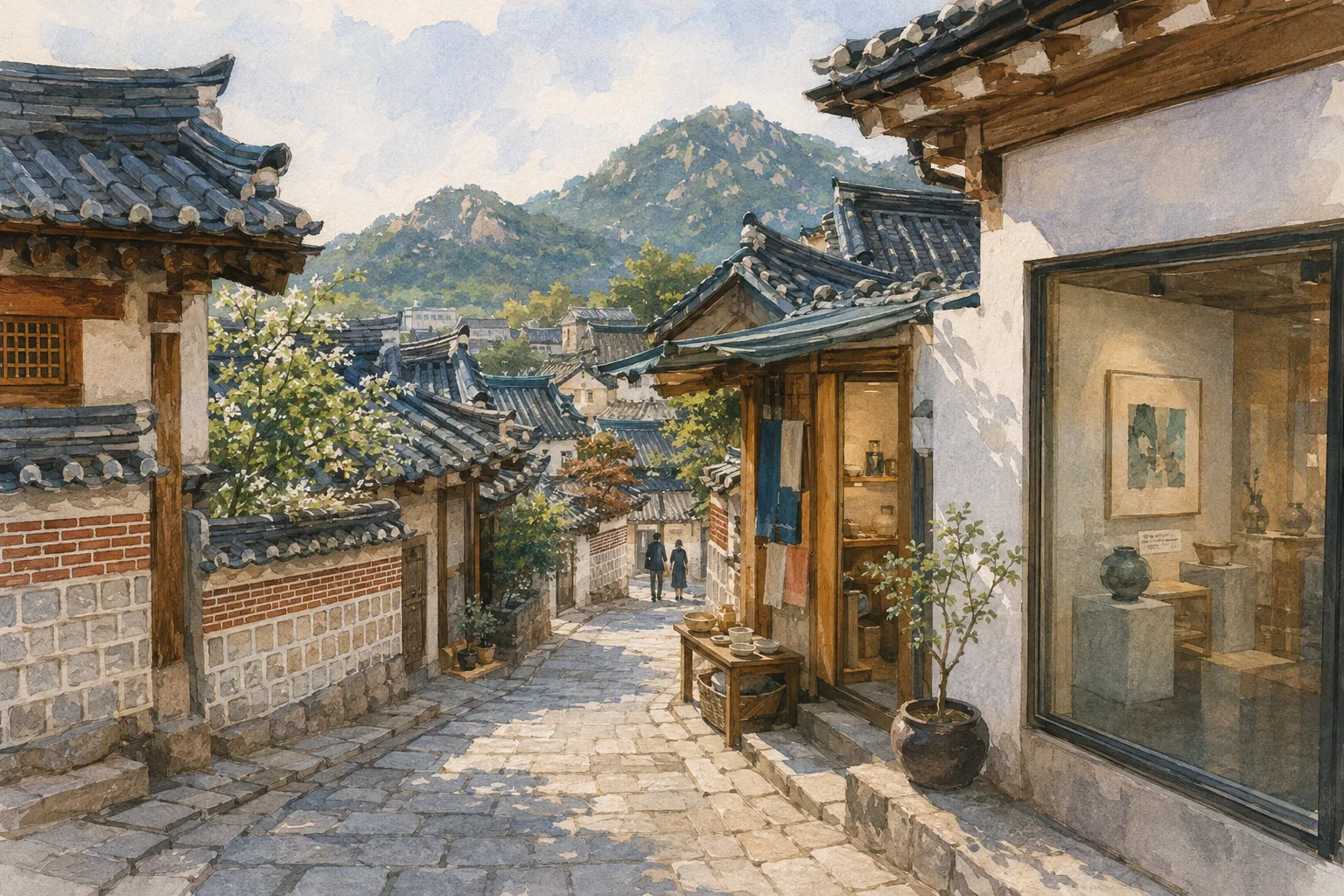
Seochon is also an area where the route matters more than a checklist. The Seoul architecture guide describes its mix of urban hanok roofs, brick, small stores, and the traces of artists who lived nearby. Leave room for the visual transitions between those places. A ten-minute walk can move from palace-scale history to a tiny workshop window without needing another train ride.
| Start with | Best for | Main tradeoff |
|---|---|---|
| Gyeongbokgung Palace | First-time visitors who want a strong historical anchor | The palace can absorb the whole morning if you do not set an exit time |
| Gyeongbokgung Station and the alleys | Repeat visitors, photographers, and slow walkers | The most interesting lanes are not a single signed attraction |
| A cafe or gallery stop | Travelers who want a softer, less scheduled afternoon | Hours, admission, and weekly closures vary by venue |
| Suseongdong Valley or the mountain edge | A quieter finish with more greenery | The route becomes hillier and less convenient with luggage |
A route that stays coherent
Start at Gyeongbokgung Station and decide whether the palace is the first block or the background to your neighborhood walk. If you have not visited Gyeongbokgung before, give it the first part of the day and exit on the Seochon side. If the palace is already familiar, go directly into Tongui-dong and let the smaller streets set the pace.
Move through Tongin-dong and Ogin-dong without treating every lane as a photo set. Keep to public paths, avoid blocking residential entrances, and lower your voice in the narrower streets. The neighborhood is still lived in, which is exactly why it feels different from a reconstructed attraction.
For a cultural middle block, use one destination that gives the walk a reason to pause. The current Seochon walking course from Visit Seoul pairs a cafe start with alleys and cultural stops, while the older Seochon gallery stroll is useful for identifying the area's creative side. Check each venue's current page before you leave; a good route should survive one closure without collapsing.
Finish with one of three endings:
- A meal near the station if you want an easy transfer to the next neighborhood.
- A tea or dessert stop if the walk itself was the main event.
- A greener extension toward Sajik Park or the lower Inwangsan side if everyone still has energy and the weather is comfortable.
What to save before you go
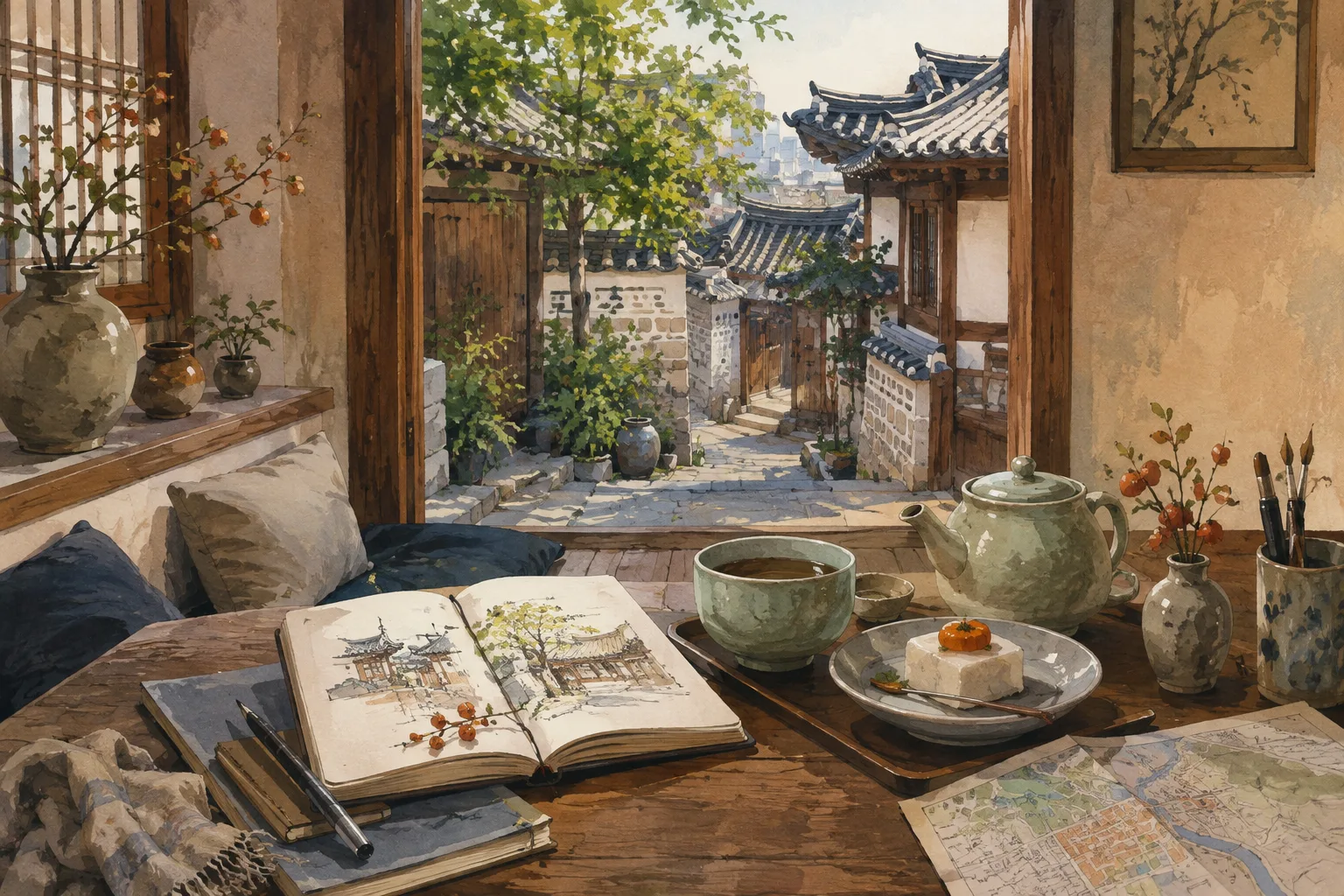
Save the Korean names as well as the English labels. 서촌 helps when you are checking map results, while 통인동 and 옥인동 narrow the search to the lanes you actually want. A neighborhood pin is not a meeting point, especially when a cafe, gallery, or museum has a similarly named listing elsewhere in Seoul.
The barrier-free Seochon course is also a useful reminder to check the exact route rather than assuming that a historic neighborhood is easy for every traveler. Before choosing a stop, look at the entrance, slope, threshold, restroom, seating, and the final approach from transit. If someone in your group uses a stroller, rolling luggage, or a mobility aid, keep the plan to fewer stops and confirm venue access directly.
Build a small weather branch into the day:
| If the day looks like this | Adjust the route | Keep as the anchor |
|---|---|---|
| Clear and comfortable | Add the longer alley loop or mountain-edge walk | Palace or one cultural venue |
| Hot or humid | Shorten outdoor wandering and add a shaded cafe break | One station-to-station route |
| Rainy | Prioritize palace museums, galleries, and a meal near transit | The cultural stop, not the photo walk |
| Crowded | Leave the busiest lane and use a parallel residential street respectfully | A pre-saved cafe or museum with a current listing |
Seochon or Bukchon?
Choose Seochon when you want more of a neighborhood day: creative spaces, food, a palace edge, and a route that can stretch toward the foothills. Choose Bukchon when the traditional residential streets and classic roofline views are the central goal, then read the Bukchon visitor guide for the quiet-street expectations and routing details.
The two areas can be combined on a map, but they are not automatically a good same-afternoon sequence. Crossing between them adds a transfer or a long walk, and both neighborhoods reward unhurried attention. Pick one as the main neighborhood and let the other become a future visit.
SeoulSheets connection
The things to do in Seoul planner and Naver/Kakao map planner turn Seochon from a long list into a short route. Filter the ready-made Destinations entries for the palace, museums, parks, and cultural stops, then use the Eats & Cafes entries for one nearby pause and one meal. Each retained row should keep its district, category, map links, current source, and last-checked note together.
For this neighborhood, the useful shortlist is usually five rows: one anchor attraction, two flexible cultural or gallery options, one cafe, and one meal. That is enough research to make the day feel intentional without turning Seochon into a scavenger hunt.
Image credits: Original SeoulSheets illustrations; no external photography license applies. Images were cropped for layout.