Free Things to Do in Seoul: A Full Day Without Paying for a Single Attraction
A realistic no-cost day in Seoul—free palace entry with hanbok, the National Museum of Korea, Cheonggyecheon, and Han River parks—with the timing that makes it actually work.
Quick answer
Seoul's best free day is not "wander until something is free." It is a set route: Gyeongbokgung Palace (free if you wear hanbok, otherwise free every Wednesday under the city's expanded Culture Day), the National Folk Museum inside the palace grounds, the National Museum of Korea across town, and a walk along Cheonggyecheon stream into the evening at a Han River park. Every one of those costs ₩0 to enter. The only spending is food, transit, and an optional ₩10,000–15,000 hanbok rental that pays for itself by unlocking free palace entry.
The free-admission rules that actually matter
Seoul's four major royal palaces—Gyeongbokgung, Changdeokgung, Deoksugung, and Changgyeonggung—are free every Wednesday under Culture Day, which expanded from once a month to every week starting in April 2026. On Culture Day, admission to all palaces and many museums is free for everyone, with no hanbok required. If your trip does not land on a Wednesday, there is a second option specific to Gyeongbokgung: wear hanbok, and entry is free any day of the week. Rental shops circle the palace, typically ₩10,000–15,000 for a few hours, which is less than most palace ticket prices in other countries and gives you the photos travelers actually plan a day around.
Two museums cost nothing on any day, not just Wednesdays. The National Museum of Korea, one of the largest museums in Asia, charges no entry fee, ever. The National Folk Museum, sitting inside Gyeongbokgung's own grounds, is free for its permanent collection and most temporary exhibitions. That makes a palace-plus-museum morning genuinely free twice over: once for the palace, once for the folk museum next door.
Build the day in this order
Morning — Gyeongbokgung and the National Folk Museum. Arrive close to opening. If you are not renting hanbok, check whether your visit falls on a Wednesday before you plan around it. Walk the palace grounds first, then step into the National Folk Museum before it gets crowded near midday. Budget two to three hours for both together.
Midday — Bukchon Hanok Village. The hanok streets north of the palace cost nothing to walk. Keep this stop short and quiet: it is a residential neighborhood, not a museum, so stay on the marked paths and keep noise down, especially in the narrower alleys.
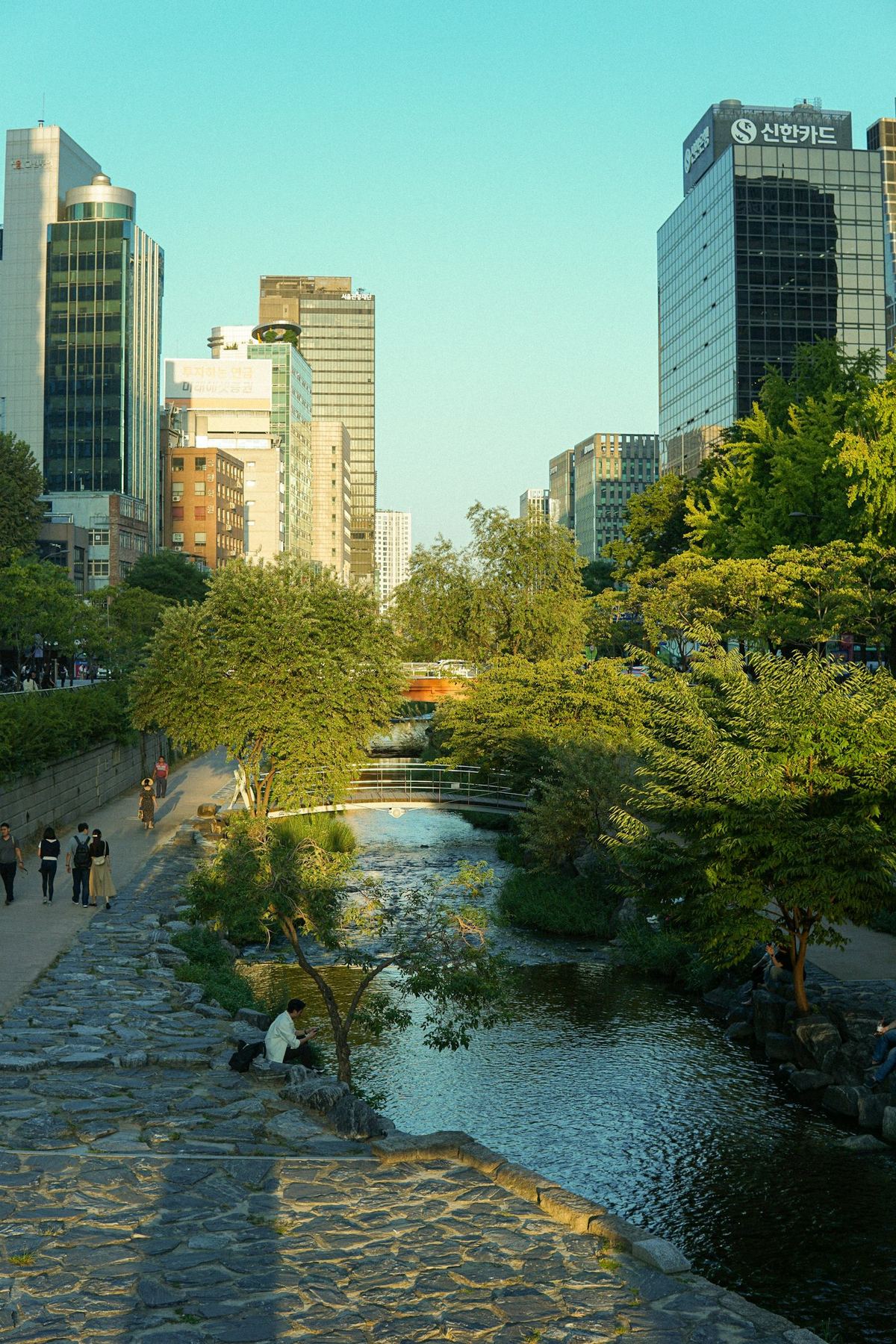
Afternoon — Cheonggyecheon stream. Walk south from the palace area down into Cheonggyecheon, the restored stream that runs through downtown Seoul from Gwanghwamun toward Dongdaemun. It costs nothing, has shade and seating along most of its length, and works as a walking transition between the palace district and the rest of your afternoon rather than a standalone destination.
Late afternoon — National Museum of Korea. If you have not used your museum energy yet, this is the better use of it than a second palace. It is large enough to need real time, so treat it as its own block rather than a quick add-on.
Evening — a Han River park. Yeouido, Banpo, or Ttukseom Han River parks cost nothing to enter and are where a lot of the city actually spends a free evening: picnics, river views, and at Banpo, the seasonal Moonlight Rainbow Fountain show. Bring your own food from a convenience store rather than paying park-adjacent prices, and check the fountain schedule before you commit to walking that far for it, since the show runs seasonally rather than year-round.
What is not actually free
Transit is not free. Budget for a T-money card and fares between stops, since this route covers real distance across the city. Hanbok rental, if you use it, is a small paid step that unlocks a free entry, which is a fair trade for most travelers but is not itself a ₩0 activity. Special exhibitions at either museum can carry a separate fee even when the permanent collection does not, so check the specific exhibition before you plan around it.
SeoulSheets connection
This route pulls from the real Destinations tab in the SeoulSheets workbook, where each palace, museum, and park row carries its own district, admission fee, and suggested duration—so "free" versus "paid" is a field you can filter on, not something you have to research fresh for every stop. Pair it with the things to do in Seoul planner guide to see how this kind of no-cost day fits next to paid stops and food on the rest of your trip. If Gyeongbokgung is the palace you plan around, the Gyeongbokgung Palace guide covers guard ceremony timing and hanbok rental logistics in more depth than this route needs to.
Final take
A genuinely free day in Seoul is not a compromise itinerary. Gyeongbokgung with hanbok, the National Folk Museum, Cheonggyecheon, the National Museum of Korea, and a Han River evening cover history, culture, and the city's most photographed river view without a single admission fee. The only real planning task is sequencing them so the free days and free hanbok trick both work in your favor.